


/cloudfront-us-east-2.images.arcpublishing.com/reuters/JEUL2B5V7BJCFMRTKGOS3ZSN4Y.jpg "Hungary’s anti-LGBTQ law breaches international rights standards – European rights body")


/cloudfront-us-east-2.images.arcpublishing.com/reuters/DYF5BFEE4JNPJLNCVUO65UKU6U.jpg "The curious case of a map and a disappearing Taiwan minister at U.S. democracy summit")

/cloudfront-us-east-2.images.arcpublishing.com/reuters/UF7R3GWJGNMQBMFSDN7PJNRJ5Y.jpg "Blinken touts deeper U.S. engagement amid concern over ‘aggressive’ China")







A historic, first-of-its-kind attempt continued in California this week that could lead to a reparation package recognizing the extensive, ongoing harm inflicted on blacks as a result of their enslavement.
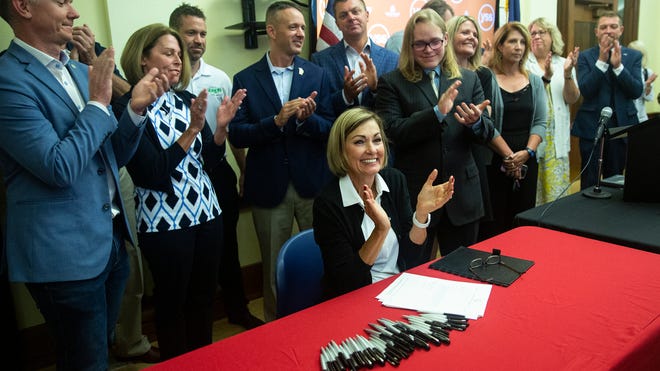
The nine members of a task force devoted to recommending reparations and promoting California’s understanding of slavery met Thursday and Friday. The goal was to cement a plan to reach out to the Californians and develop a broader context about the history of slavery.
The group, formed after Assembly Bill 3121 was passed in 2020, will meet seven more times before submitting a report to the legislature next June. It will include recommendations for reparations to black California residents, with particular reference to African-American descendants of slaves.
In addition, federal efforts are currently underway to create a similar task force to examine federal reparations through HR 40, which was introduced in 1989.
The task force consists of Dr. Cheryl Grills, Dr. Amos Brown, Lisa Holder, Donald Tamaki and Dr. Jovan Scott Lewis, Senator Steven Bradford (D-Gardena), Assemblymember Reginald Jones-Sawyer (D-South Los Angeles), Alderman of San Diego, Monica Montgomery Steppe and Kamilah Moore.
Here are some of the main topics discussed this week:
How to address black Californians
Grills presented a plan to raise contributions from black residents across the state to be carried out in partnership with the UCLA Bunche Center for African American Studies.
The plan calls for up to 12 community listening sessions supported by “anchor organizations” well connected to black communities in California’s geographic regions. It will highlight areas likely to be overlooked and include local outreach to ensure that anyone interested can participate. Ultimately, it would lead to a report that summarizes comments and descriptions of damage and is expected to cost $ 765,000.
Several attendees expressed concerns about the selection of these anchor organizations and the inclusiveness of the plan.
Brown, vice chairman of the task force, said he wanted to include the “in the trenches”. He specifically cited black educators, psychologists, and members of the Church as examples of groups whose views were important.
Chris Lodgson of the Coalition for A Just & Equitable California reiterated that the task force should expand its scope beyond the strong group focus and take a more direct approach to public relations.
“I would also find ways to make direct contact with black people in California because, in all honesty, not everyone we need to speak to is touched by these groups,” he said. “In many ways we are ourselves separated from the groups and organizations that are here to do us good.”
Dr. Michael A. Stoll, faculty director of the Black Policy Project at the Bunche Center, said he hoped the anchor organizations, combined with connections to media, communications and local organizations, “boots-on-the-ground” could reach people on the fringes Participation across the country.
Concerns about including a wide range of views re-emerged during a discussion of an update from the Justice Department in which a department spokesman said the task force could not hold Saturday meetings due to a lack of resources.
Several board members expressed concern about the lack of accommodation. Some groups that may not have been able to attend were black residents who had multiple jobs and black students who attended school on weekdays.
Bradford, chairman of the Black Caucus Legislature, said the task force was an opportunity to make history for the state and country, and limiting meetings to Monday through Friday reduced that impact.
“As a person elected for 22 years, I think public opinion is of the essence,” he said. “And to silence that voice, whether unintentional or not, by saying we can’t hold a meeting for a weekend, I find a bit offensive, especially given our current budgetary position.”
California currently has a budget surplus.
A discussion of California’s history of slavery
Another focus of the committee’s work is to compile a history of the institution of slavery and its past and present effects to be disseminated across the state.
Although California was a free state, that didn’t mean California didn’t have slavery.
Before the state joined the union with its anti-slavery constitution in 1850, there were already enslaved blacks brought into the state by Americans during and after the Mexican-American War, according to Oregon State University history professor Stacey Smith. The state did nothing to stop what was already taking root, and brutal violence similar to that seen in the south happened to slaves in California.
“The exact number of enslaved blacks in California is difficult to determine,” she said. “But given the fragmented records, I support the findings of a historian named Rudolph Lapp, who estimated that there were at least 500 to 600 enslaved blacks in California during the gold rush.”
And California’s first governor, Peter Burnett, and the legislature were actively working to pass anti-black laws, according to Smith. In 1852, they enacted a Fugitive Slaves Act, which gave slave owners a year to arrest and deport alleged runaways – and then extended it for three years. This included all of the enslaved blacks who lived in California before it was approved as a free state in 1850.
State officials were hired to assist with arrests and arrests, and slave owners were empowered by law to use force.
The legislature also tried four times in the 1850s to pass a bill to exclude blacks. While this never got through, there were several other anti-black laws that made it illegal for blacks and whites to marry or testify against whites in court. Among other things, it refused state subsidies for black children to attend public schools.
“As with many things, California was ahead of its time,” said Smith. “But in this case, tragically, the state was at the fore in establishing racial oppression against blacks in the United States.”
An 1874 California Supreme Court decision in Ward v. Flood, in which judges ruled that segregation in public schools was legal as long as black and white children had equal access to similar educational institutions, is an example of some of these more progressive changes. 22 years later, the principle “Separate, but equal” according to Plessy v. Ferguson national.
Reparations from another lens
The task force invited Yale University law professor Roy Brooks and Kamm Howard, the national male chairman of the National Coalition of Blacks for Reparations in America, to speak on reparations nationally and internationally.
Brooks discussed two different models of reparation: the crime model and the atonement model.
The first is victim-oriented and focuses on finding compensation. Conversely, the atonement model focuses on restorative justice – the restoration of a relationship between victims and perpetrators of an atrocity through a credible apology and forgiveness.
He said he preferred atonement and rehabilitative reparations, which “were designed to rebuild the community after the atrocities and wealth-building reparations.”
“It’s an agreement,” he said of the compensation. “And the way settlements work in law is that the defendant is not accepting liability.”
“Most contemporary compensation payments are direct cash payments,” he added. “Individuals can take that and gamble, go to Las Vegas to gamble it away. … I can tell you a check for $ 25,000, one time, that won’t bring the victims back to the status quo ante. “
Brooks suggested finding boarding schools as the main focus of rehabilitation efforts, saying that education itself is fundamental and that investing in it is more effective than a hodgepodge of reparations.
“What we learned from Thurgood Marshall of the Legal Defense Fund is that focusing on education is a very good way to attack racial injustice,” he said.
However, others stressed the importance of financial compensation.
Committee chair, Kamilah Moore, disproved the idea that cash payments were being gambled away.
“I think it’s problematic to say that black Americans descended from agile slaves here in the United States would just go out and spend it on frivolous things,” she said. “I want to get away from the idea that black Americans are financially illiterate and that once the reparations are in, they won’t have the money to build their communities or families.”
Howard said he used terms such as “African American” and “crimes against humanity” to allay concerns about reparation as a “race-based remedy” and to erase the history of whites in bondage.
“‘African Descendant’ is a specific international name given to people who were robbed and subjected to all forms of economic exploitation, abuse and crime on the African continent during a multi-country criminal enterprise they call ‘trade’ throughout the West.” he said. “Your descendants are still injured by these crimes today. … This legislation is for our people who have had criminal activities directed against them by the federal government in the past. “
“I believe that if we received compensation in the form of interest on direct payments … a significant number of us would work together with our resources to build a community that we did not have in this country,” he said.
Jonathan Burgess, whose great-great-grandfather the house is now a state park, said that for those whose land has been taken from the state, he would like to see that land returned to the owners in 200-year leases, in recognition of who it is owned and paid for for the years it was owned by the state.
“I’m not blaming the institutions because, after all, California is an institution,” he said. “And the institution never worked for us blacks in America, blacks in California. So how can I expect the people who work for the institution to help me? I hope you do. “
When the committee meets again in October, it will discuss the Jim Crow era and its ongoing impact on African Americans, especially those who are descendants of enslaved people.
Copyright 2021 CapRadio