



/cloudfront-us-east-2.images.arcpublishing.com/reuters/JEUL2B5V7BJCFMRTKGOS3ZSN4Y.jpg "Hungary’s anti-LGBTQ law breaches international rights standards – European rights body")


/cloudfront-us-east-2.images.arcpublishing.com/reuters/DYF5BFEE4JNPJLNCVUO65UKU6U.jpg "The curious case of a map and a disappearing Taiwan minister at U.S. democracy summit")

/cloudfront-us-east-2.images.arcpublishing.com/reuters/UF7R3GWJGNMQBMFSDN7PJNRJ5Y.jpg "Blinken touts deeper U.S. engagement amid concern over ‘aggressive’ China")








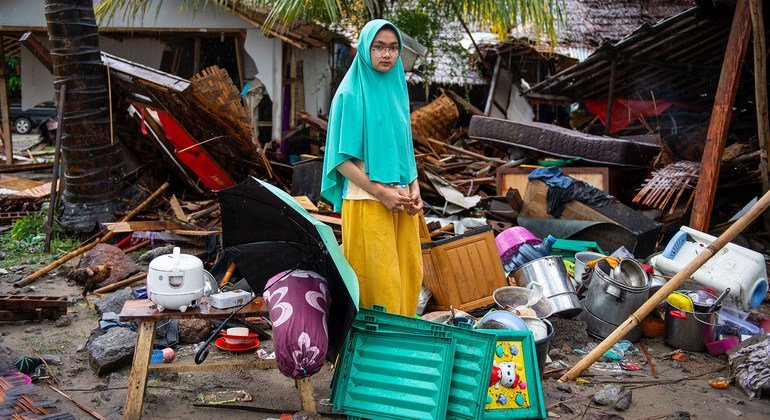
For this reason, the United Nations have chosen strengthening international cooperation for developing countries as the theme of this year’s World Tsunami Day.
In a message on the occasion of the day, the UN Secretary General called on all countries, international bodies and civil society to increase understanding of the deadly threat and to exchange innovative approaches to risk reduction.
“We can build on the progress made – from better outreach for tsunami-prone communities around the world to the inclusion of a tsunami program in the UN Decade of Marine Research for Sustainable Development,” said António Guterres.
However, the UN chief warned that the risks “remain immense”.
“The rise in sea levels caused by the climate emergency will only add to the destructive power of tsunamis,” he said. “We need to limit warming to 1.5 degrees above the pre-industrial average and invest heavily in the resilience of coastal communities.”
Rapid urbanization and growing tourism in tsunamis-prone regions are also putting even more people at risk.
Joint effort
For Mr. Guterres, science, international collaboration, willingness and early action must be at the center of all efforts to make people and communities safer.
“It is crucial to step up support for developing countries and improve detection and early warning. In the face of increasingly complex global crises, we need to be better prepared, ”he argued.
In 2021 World Tsunami Day promotes the “Sendai Seven Campaign”, in particular the aim of improving international cooperation with developing countries.
The Secretary General concludes his message with an appeal to adhere to the Sendai framework and collectively build resilience to all disasters.
Rarely but fatal
Tsunamis are rare occurrences but can be extremely deadly.
58 of them have claimed more than 260,000 lives in the past 100 years, an average of 4,600 per disaster – more than any other natural hazard.
The highest death toll occurred in the Indian Ocean tsunami in December 2004, which killed an estimated 227,000 in 14 countries. Indonesia, Sri Lanka, India and Thailand were hardest hit.
Just three weeks after the disaster, the international community met in Kobe, Japan, and adopted the 10-year Hyogo Framework for Action, the first comprehensive global agreement on disaster risk reduction.
They also created the Indian Ocean tsunami warning and mitigation system, which uses seismographic and sea level monitoring stations to send alerts to national tsunami information centers.
After the Hyogo Framework for Action expired in 2014, the world adopted the Sendai Framework for Disaster Risk Reduction 2015-2030, which outlines seven clear goals and four priorities for disaster risk prevention and reduction.
https://news.un.org/en/story/2021/11/1104972