



/cloudfront-us-east-2.images.arcpublishing.com/reuters/JEUL2B5V7BJCFMRTKGOS3ZSN4Y.jpg "Hungary’s anti-LGBTQ law breaches international rights standards – European rights body")


/cloudfront-us-east-2.images.arcpublishing.com/reuters/DYF5BFEE4JNPJLNCVUO65UKU6U.jpg "The curious case of a map and a disappearing Taiwan minister at U.S. democracy summit")

/cloudfront-us-east-2.images.arcpublishing.com/reuters/UF7R3GWJGNMQBMFSDN7PJNRJ5Y.jpg "Blinken touts deeper U.S. engagement amid concern over ‘aggressive’ China")







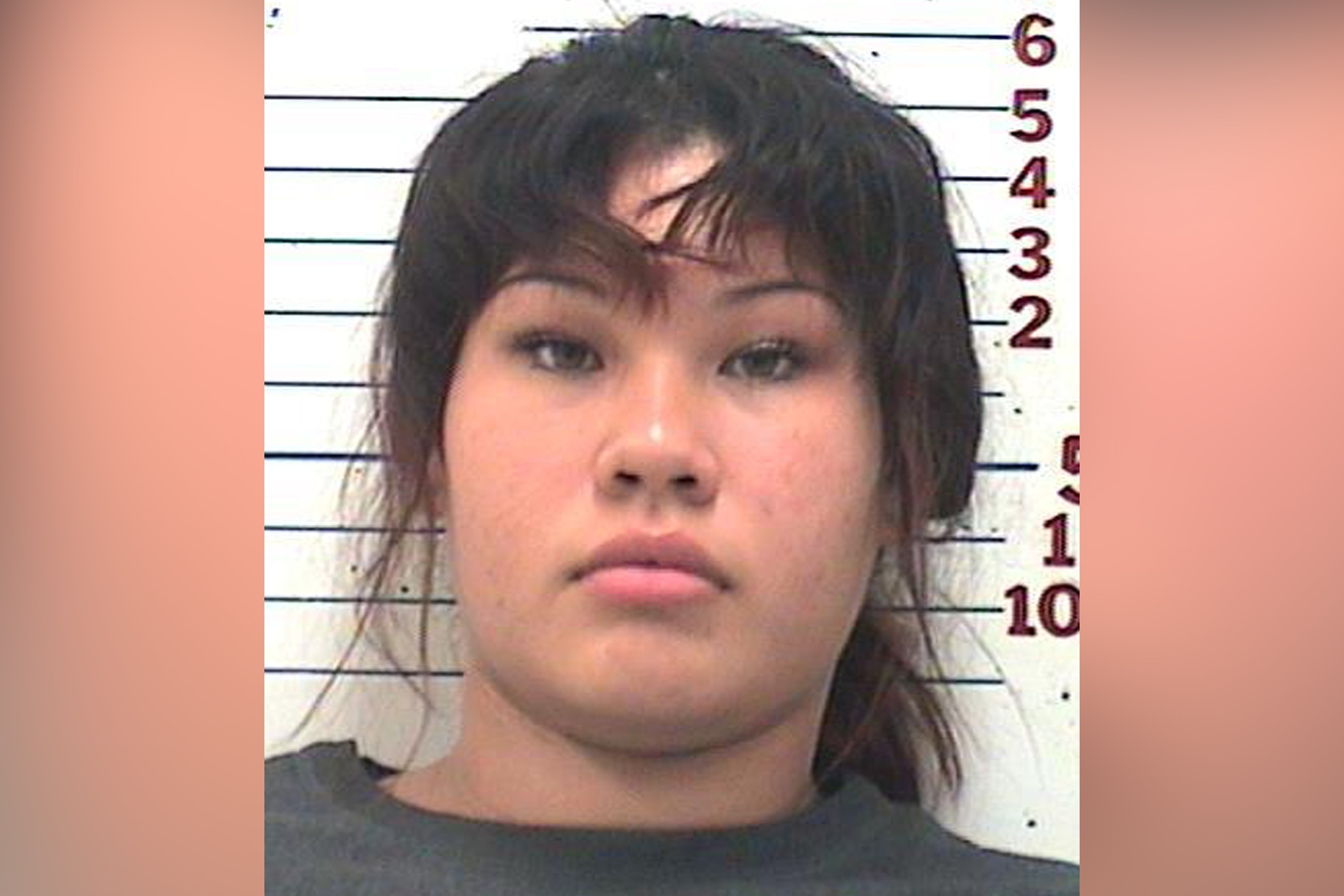
Prosectors in Oklahoma successfully argued before a jury earlier this month that a woman who had miscarried was guilty of manslaughter of her non-viable fetus.
Brittney Poolaw, 21, was convicted by a Comanche County jury on October 5 of second degree manslaughter for the death of her fetus, which was gestational age 15 to 17 weeks, ABC subsidiary KSWO in Lawton, Oklahoma reported. She was charged in the case on March 16, 2020 after a miscarriage on January 4, 2020.
Obstetricians determine gestational age based on the date of the woman’s last period before pregnancy – that is, before the date of conception. The US Supreme Court ruled in 1973 with Roe v. Wade found that legal viability was after the 28 percent chance of survival outside the uterus, according to the American College of Obstetrics and Gynecology. The Centers for Disease Control and Prevention define a fetus as “stillborn” only if it is delivered after the 20th week of pregnancy; before that, it is considered medically a miscarriage.
The Lawton Constitution reported last year that Poolaw, then 19, suffered a home miscarriage in early 2020 and was taken to Comanche County Memorial Hospital with the umbilical cord on the fetus. She told medical staff that she used both methamphetamines and marijuana during her pregnancy.
Later, in interviews with police, Poolaw allegedly confirmed that she smoked marijuana but took methamphetamines intravenously, including only two days before her miscarriage. She also allegedly told them, according to the Lawton newspaper, “that when she first got pregnant, she didn’t know whether or not she wanted to keep the baby.”
From these reports, it is unclear whether she had actively chosen to continue the pregnancy because she was 15 to 17 weeks old, simply hadn’t made a decision, or had few options but to continue. The nonprofit Guttmacher Institute finds that 53 percent of Oklahoma women in 96 percent of counties live without facilities that offer abortion services – including Comanche County – and the state requires a woman to visit a provider twice 72 hours apart to obtain an abortion. Abortion is not legally covered by most private insurance plans in the state without an additional driver, and Medicaid is only covered in extremely limited cases.
(In April 2021, the Oklahoma governor signed three bills effectively abolishing access to abortion in the state – including a ban on abortions after six weeks of gestation. The new laws are due to go into effect in November, but they would not in the case of Poolaw have requested.)
Technically, Oklahoma state law did not criminalize women for miscarriages, stillbirths, or other fetal harm that prosecutors found the woman guilty of until the state Supreme Court ruled in September 2020 that it did, despite state neglect of law Children and homicides were not indicative of fetuses, the laws still included a viable fetus whose mother was on drugs.
Still, prosecutors filed charges against her in the Poolaw case in March 2020, nearly six months before the court’s ruling.
In March 2021, the coroner released the results of the autopsy of the fetus in which Poolaw had a miscarriage, as reported by KSWO. Tests of the developing liver and brain of the fetus were positive for “methamphetamine, amphetamine, and another drug,” but they also found evidence of “a congenital abnormality, placental detachment, and chorioamnionitis”. (The coroner did not specifically name the congenital anomaly.)
The CDC defines congenital abnormalities as “a wide range of abnormalities in body structure or function,” some of which may be incompatible with the viability of the fetus. Placental detachment is when the placenta separates from the wall of the uterus, which can be a cause of miscarriages, stillbirths and also kill the mother, according to the Mayo Clinic; it occurs in 1 in 100 pregnancies, according to the March of Dimes. One of the causes can be chorioamnionitis, an infection of the amniotic fluid and the two membranes of the amniotic sac, which, according to the Cleveland Clinic, can be fatal to the mother and fetus on its own. It is believed that this is due to an infection of a mother’s genitourinary tract; A 2010 study of chorioamnionitis in perinatology clinics suggests it occurs in up to 4 in 100 pregnancies. Timely prenatal care reduces the risks of the most serious complications.
(Notably, Native American maternal mortality rates are more than twice that of white women and 150 percent more likely than white women to have stillbirths – defined as fetuses over 20 weeks of age – than white women, according to the CDC. Most Studies attribute this to Native American women’s disproportionate poverty rate and access to health care – including prenatal care – as well as systemic racism.)
Although there are now few studies of meth use during pregnancy, a 2016 study in the Journal of Addiction Medicine of meth use and pregnancy outcomes found that “No consistent teratological effects from in utero [methamphetamine] Exposure to the developing human fetus has been identified “and that other studies of drug use during pregnancy” have shown that the effects of poverty, poor diet, and tobacco use … have been shown to be as harmful or more harmful than drug use “itself.” This study found that the most common effects of continual meth use during pregnancy are low birth weight and premature birth (although the average date of birth was still in the third trimester).
At Poolaw’s one-day trial, KSWO reported, evidence was presented to the jury by the prosecutor that there is no way to say with certainty that her drug use caused her miscarriage, and both the nurse and coroner found what the investigation found fetal abnormalities fixed autopsy.
The jury sentenced her in less than three hours. She was sentenced to four years in prison.
“In Oklahoma, we’ve seen a real surge in the prosecution of women with miscarriages or stillbirths in recent years,” said Dana Sussman, assistant executive director of the National Advocates for Pregnant Women (NAPW). Oxygen.com. She suggested that part of the reason for the increase in cases was the 2020 state Supreme Court ruling.
“Oklahoma became the third state in the country to have its chief judge sanctioning this type of prosecution as an extension of existing criminal law – be it criminal neglect of children or child endangerment or child abuse or murder or manslaughter,” she said. “Of course, prosecutors brought these cases up to this ruling, but this was the first they came to the Oklahoma Supreme Court,” after the lower courts dismissed them as too large.
Sussman said her conviction in Poolaw’s case even appears to violate the sweeping freedom of movement of the 2020 judgment, which only applied to “viable” fetuses.
“In a case like this, how do you determine that a fetus is viable at any gestational age?” She asked. “Here we have both the fact that the medical consensus is that this fetus is previbratable simply because of its gestational age. But on top of that, the coroner listed a number of other conditions the fetus must have had, “possibly leading to a miscarriage.”
“And of course,” she added, “some miscarriages just happen and we don’t know the cause.”
Statistics from the NAPW show that cases like Poolaw’s – in which women are prosecuted for miscarriages or stillbirths caused by the state and / or drug use during pregnancy – are becoming increasingly common. Since abortion was legalized in 1973, a total of 1,600 women have been prosecuted in the United States for acts during their pregnancy, according to the NAPW; 1,200 of these women were prosecuted after 2006.
Oklahoma, with 57 such cases documented since 2006 and only nine before that, is the fourth largest such case nationwide. (Alabama accounts for 500 of the 1,200 cases since 2006, making it the state most likely to prosecute women for acts during their pregnancy, followed by South Carolina and Tennessee.)
Sussman notes that many of the cases of child neglect or vulnerability brought against women over lawsuits during their pregnancies are “exposure, not harm. In those cases, prosecutors don’t even have to claim or prove that Fetus harm was inflicted. “
“Black women are disproportionately represented in these arrests and other deprivation of liberty,” she added. “Of course, all of this has its roots in the racist propaganda surrounding the ‘war on drugs’ and ‘crack babies’ hysteria that dealt with it in the 1980s and 1990s.
“The people who are most closely watched in all forms,” she said, “are disproportionately colored women and colored families.”