

/cloudfront-us-east-2.images.arcpublishing.com/reuters/JEUL2B5V7BJCFMRTKGOS3ZSN4Y.jpg "Hungary’s anti-LGBTQ law breaches international rights standards – European rights body")


/cloudfront-us-east-2.images.arcpublishing.com/reuters/DYF5BFEE4JNPJLNCVUO65UKU6U.jpg "The curious case of a map and a disappearing Taiwan minister at U.S. democracy summit")

/cloudfront-us-east-2.images.arcpublishing.com/reuters/UF7R3GWJGNMQBMFSDN7PJNRJ5Y.jpg "Blinken touts deeper U.S. engagement amid concern over ‘aggressive’ China")

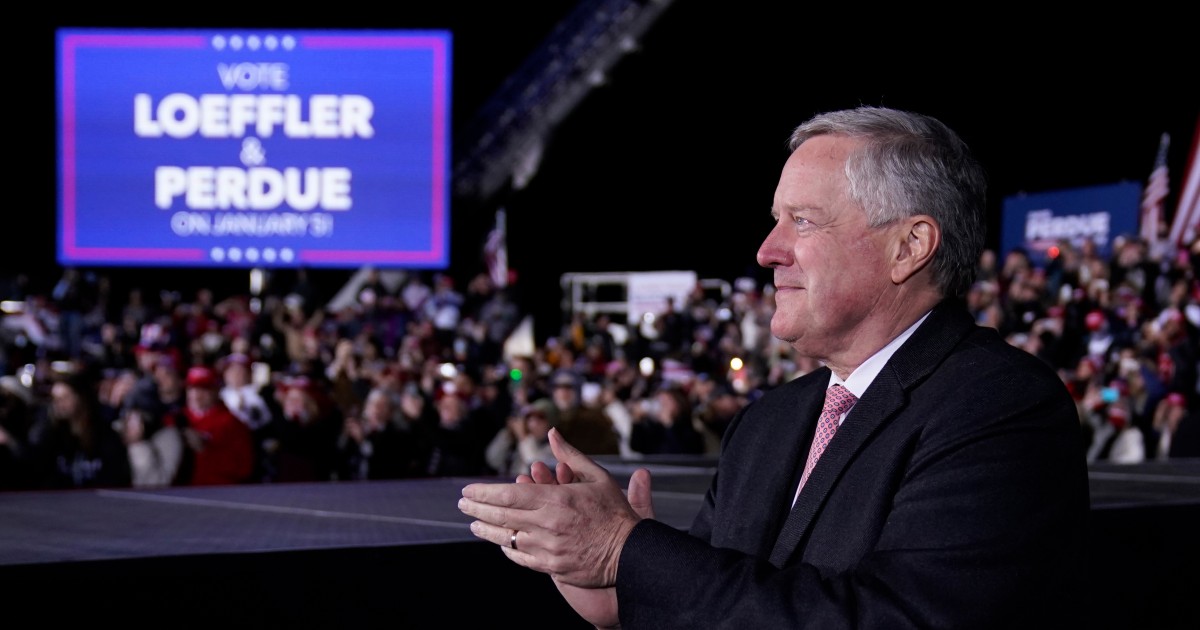





NAIROBI, Kenya – Three people were killed and more than 100 injured in Sudan on Saturday, a medical group said as pro-democracy crowds flooded the streets, despite a military coup this week that ushered in a new era of uncertainty for one of the largest countries Africa.
Activists called for a “march of millions” days after Lieutenant General Abdel Fattah al-Burhan, the military chief, dissolved the joint civil-military government that in 2019 after the overthrow of Omar Hassan al-Bashir, the longtime dictator of Sudan, Had taken shape. On Monday, General al-Burhan ordered the arrest of the prime minister and other high-ranking civilian leaders, declared a nationwide state of emergency and said the military would form a new government. He promised elections in July 2023.
The moves sparked widespread demonstrations during the week as protesters in the capital, Khartoum and other Sudanese cities, called for a return to civilian rule. The security forces reacted with violence, killing at least seven people and injuring 170 others before the demonstrations on Saturday, according to the democracy-friendly Central Committee of Sudanese Doctors. Professional and trade unions called for civil disobedience, many banks, schools and shops closed their doors and many federal and state government employees stayed at home.
The Sudanese military has a history of bloody raids, and analysts said Saturday’s protests and security forces’ response would be a test of the military’s readiness to turn a page. Many Sudanese vividly remember June 3, 2019, when security forces violently dispersed protests in the capital, raped and killed dozens of people, and threw some of the bodies in the Nile.
“The military promises to build a democratic civil state and step over the corpses of innocent people in the process,” said Dr. Sara Abdelgalil, spokeswoman for the Sudanese Professionals Association, a pro-democratic union coalition. “We cannot allow this military takeover to become a success story.”
The group of doctors announced in a Facebook post that two of the dead in Omdurman, the twin town of., Had been killed Khartoum. The security forces there fired sharp bullets at demonstrators, notified the group of doctors, and hit one in the head and the other in the stomach.
The group did not provide any information on where the third person was killed, but reported dozens of casualties in the city of Bahri, near the capital, and in Gedaref state to the east. The demonstrations continued into the night, with demonstrators still marching in the streets.
The dead and injured came despite repeated calls from the United States and the United Nations to allow peaceful protests.
On Friday evening, the United Nations Special Envoy to Sudan met with General Mohamed Hamdan, known as Hemeti, who heads the dreaded Rapid Support Forces paramilitary forces played a role in the recent coup. The envoy Volker Perthes said on Twitter that he emphasized to the general the need to avoid “any confrontation” with demonstrators.
U.S. special envoy to the Horn of Africa Jeffrey Feltman said he spoke to General al-Burhan and other top officials on Friday, warning of a violent response to the planned rallies.
“The Sudanese people must be able to protest peacefully this weekend, and the United States will look closely,” Mr. Feltman’s office tweeted.
Foreign Minister Antony J. Blinken reiterated this message. “The United States continues to stand by the Sudanese people in their non-violent struggle for democracy,” he tweeted. “Sudan’s security forces must respect human rights; any violence against peaceful demonstrators is unacceptable. “
Some members of the Sudanese military have been surprised by the level of public opposition to the coup, and rivalries between the generals are beginning to emerge, said Ed Hobey-Hamsher, senior Africa analyst at Verisk Maplecroft, a global risk education company based in the UK.
“The fate of the coup is still pending,” he said.
Pro-democratic groups have turned down the option of recognition or negotiation with a military government and have instead called for the release of all civilian leaders, including Prime Minister Abdalla Hamdok, who is now under house arrest. The UN envoy, Mr Perthes, said in a statement that he was in contact with all sides and was trying to mediate “in the direction of a peaceful solution to the current crisis”.
In an interview with Al Jazeera television, Mariam al-Sadiq al-Mahdi, the foreign minister of the now defunct Sudanese government, said that the military must respect the democratic aspirations of the Sudanese people. She said she remained concerned for Mr. Hamdok’s welfare.
“The Sudanese people spoke clearly today,” she said. “We must humbly and respectfully submit to the ideas of the Sudanese people.”
Tensions over the possibility of a coup had been building for months as civil groups accused the military of holding on to power and resisting efforts to hold commanders responsible for corruption and human rights crimes under Mr al-Bashir, the ousted dictator to pull.
Amid a nationwide internet blackout on Saturday, protesters with Sudanese flags gathered in neighborhoods in Khartoum and Omdurman at noon before marching to the main streets and bus stations.
Protesters could be heard chanting, “The people are stronger and the revolution will go on.” Others carried banners with the words “No to military rule”.
According to witnesses, the security precautions around the military headquarters in the capital remained tight, main bridges were closed and the road to the airport was temporarily closed.
In El Fasher, a city in the North Darfur region of northwest Sudan, the army closed the market and sent people home, said an auxiliary official, who spoke on condition of anonymity in order to minimize possible risks to the operation of his organization .
The cities of Geneina in West Darfur and Gedaref in the east also had a strong military and police presence, the official said. In some cities, the military cleared blockades made of bricks, slabs and branches that protesters had placed across streets to prevent them from gaining access to the neighborhoods.
On Saturday protests took place not only in Sudan but in cities around the world with sizeable Sudanese populations. Protesters against the coup took to the streets in Australia, Indonesia, Italy, Lebanon, Norway and the United States.
“We were shocked by what was happening in Sudan,” said Elhussein Yasin, board member of the Sudanese Diaspora Roundtable in the UK, over the phone. He said protesters appeared in major UK cities like London and Birmingham to urge UK lawmakers to urge the Sudanese generals to give up power.
“We are protesting to say no to a military coup and yes to democracy,” said Yasin.
The coup and subsequent protests are the latest signs of instability in the northeast African nation, hampered by mounting economic difficulties, the coronavirus pandemic, and shortages of medicines and fuel. This week the US frozen $ 700 million in direct aid to the Sudanese government, the World Bank suspended all payments to the country, and the European Union threatened to follow suit.
The African Union suspended Sudan and the generals have been condemned by leaders and governments around the world. President Biden said he “admired the courage of the Sudanese people to have their voices heard”.
Amnesty International on Friday called on Sudanese generals to investigate the killings of protesters earlier this week and to prosecute those involved.
Deprose Muchena, Amnesty International’s regional director for East and South Africa, said military leaders “must make no mistake: the world is watching and will not tolerate further bloodshed”.